Monday, May 27, 2019

52 Ancestors in 52 Weeks Week 19 Prompt - Nurture

52 Ancestors in 52 Weeks
Week 19
Prompt – Nurture


To nurture is to care for someone or something and also to encourage their growth and development. I believe that nurturing our children, for example, is a natural part of who we are as human beings. Throughout my blogs I suggest that the immigration of my ancestors was the result of seeking religious and political freedom and free abundant land. Underlying all of this has to be the want to nurture their children and give them land that was no longer available in their former countries. Owning land meant that they could grow and harvest more food to feed their growing families. Their new land allowed them to be together in their own language and culture which was important to them to encourage them to grow in their faith and be allowed to live according to their moral beliefs. Obviously this nurturing worked as we are here.

ME  >  JACOB PETERS (my father)  >  FRANZ PETERS (his father)  >  DAVID KLAAS PETERS (his father)  >  NIKOLAUS (KLAAS) PETERS (his father)  >  ARON PETERS. (his father).

Aron Peters, my 3rd great – grandfather was born in 1745 in Pietzckendorf, Prussia. He was married 3 times. 

His first wife (unknown name) gave him two daughters. This wife died sometime on or before 1780. He married his second wife, Helena Krahn on September 14, 1780. It was not unusual for the remarriage to happen so quickly after the death of a wife because he had children that needed a mother to nurture them. Aron and Helena were married in Heubuden, Gross Werder, Prussia. Aron and Helena Peters are my direct ancestors (5 generations).
Aron and Helena had 3 children prior to moving to Russia. Anna Peters (1782 – 1802). Jacob Aaron Peters ( 1784 – 1856). Cornelius Aaron Peters ( 1786 – 1886).
In 1789 at the approximate age of 44 – Aron and Helena and their 3 children (and possibly Elizabeth from Aron's first marriage) immigrated to Russia. Aron Peters was among the first settlers to start Schoenhorst in Chortitza Colony of Mennonites in Russia.
They had 4 more children. Gertrude Peters (1791 – 1802). Aron Peters (1794 – 1856). Klaas Peters (1797 – 1866). David Aaron Peters (1798 – 1866). Klaas Peters is my direct ancestor.
Helena Peters (nee Krahn) died in April 1801. Leaving Aron with 8 children. It was little wonder that he remarried three months later in July 1801 to a women named Kristina (1754 – after 1802). Kristina and Aron had no children as far as I can tell. At the age of 57 Aron died in January 1802 along with his 20 year old daughter, Anna, and his 11 year old daughter Gertrude. I do not know if they died the same day as in some horrific tragic accident or whether they died in the same month due to some disease.
Let's look at Kristina and her history as it intersects the Peters Family. Kristina was born in Vistula Delta, Poland in 1754. She was married 4 times. 

 At 16 years of age she married Peter Reimer ( 1744 – 1795) in Poland. They had 5 children. Jacob Reimer (abt. 1771), Christina Reimer (abt. 1772), Anna Reimer (abt. 1782), Maria Reimer (abt. 1791), and Peter Reimer (abt. 1794). Kristina's husband, Peter Reimer died in either 1795 or 1797, none the less Kristina remarried. His name was Gerhard Doerksen (1774 – 1801), They had two children together. We know the second child as David Doerksen born about 1797. Gerhard Doerksen died in March of 1801. Kristina was widowed with 8 children from her first two marriages. Remember she married Aron Peters – her 3rd husband who 8 of his own children. They married in July of 1801. Six months later Aron Peters dies and leaves Kristina with 14 children to nurture. Kristina goes on to marry her fourth husband, Aron Lepp on May 22, 1802. Kristina is listed as dying about 1802. I have no further information whether her 4th husband remarried. My educated guess is that he did and not too long after the death of Kristina. There was about 14 children left behind at this time. And we think we invented the blended family!
In order to nurture their children my ancestors remarried quickly after the loss of a spouse. It was a necessity. It was expected.

Wendy

Monday, May 20, 2019

52 Ancestors in 52 Weeks Week 18 Prompt - Road Trip

52 Ancestors in 52 Weeks
Week 18
Prompt – Road Trip 


My husband and I enjoy our holiday road trips. There is nothing like hitting the wide open road. We put on our favorite music or a audio book and watch the miles go by. For us it is all about the journey and not so much the destination.
I remember several road trips as a child with my parents. Often we were headed out to Vancouver to visit my paternal grandmother, Elisabeth Peters. My mom hated the drive through the high mountain passes so we went the southern route on what is now the #3 Highway. There was mountains but not as high. The particular trip I recall was about 1961 or 1962 when I was 6 or 7 years old. Dad could only get holidays in September because his seniority (or lack of seniority) at The Olympic Meat Processing Plant never allowed summer holidays. We got to start school late which was no big deal for me when I was younger, but later on it was kind of cool. Our family car was a small 4 door Chevy of some type. It was a tight fit for mom and dad and 6 of their 7 children. My oldest sister was in nursing school and never went along. These were the days of no seat belts. My 3 brothers and older sister crammed the back seat. My younger sister sometimes drove in between mom and dad in the front seat, but I recalled her sleep time being spent lying across the shelf of the rear window. And poor me – I got the back seat floor. The one with a hump in the middle of the floor and all my brother's stinky feet. Til this day I do not know how mom and dad survived us on that trip. We complained, screamed, fought, whined and begged to be let out for a bathroom break or a break for just walking around. Oh dad you were a saint to put up with the kicking feet in the back of your seat while driving all the way to Vancouver. 

As a special treat, once we did get to stop for a roadside diner lunch and it was the first time that I had a“hot hamburger sandwich” plus a coke to drink. It was heaven. I do not know how mom and dad could afford it but maybe we all shared meals.

We could not afford hotels so we slept in campgrounds along the way. The tent was only 10 by 10 feet. We arrived late at night and dad and my brothers put up the tent using the car headlights to see. It didn't matter because it was always put up on the most uncomfortable tree trunks and rocks of the campground. That one particular night was super late and too late for a campfire so we got to eat sugar cubes and crackers for supper.
To say the least 8 of us in that one tent was uncomfortable. One of us slept across the top and the other slept crosswise at the zipper end of the tent. That person grumbled the most because they were always being stepped on as one or another of us had to leave to use the bathroom.
In the morning we had a campfire which had coffee on the go for dad. I don't remember what we ate for breakfast – probably cereal. I distinctly remember going to the a nearby stream / river to scoop up our water for consuming. No seat belts and drinking stream water; how did we ever survive?
We packed up very quickly after breakfast when the boys came running to tell mom and dad that they spotted a bear across the stream just hanging out. I knew very little about bears but it lit a fire under everyone else.
How did they fit a tent, camping cooking equipment, blankets, sleeping bags, suitcases or bag for the clothes into the trunk? There was sure no room in the car for any of it.
The cramped tent and car was the memorable part of the trip for me. It was so different from how we lived in the city.
Finding Grandmother Peters Home!

There was always tension for mom and dad once we got to Vancouver. We never knew where grandmother lived. She lived on Social Welfare and moved from place to place quite frequently. Dad had one family member who was more stable and as soon as we got to the city dad found a pay phone and called him for the address and directions. There was no GPS, cell phones or city maps. We depended on the directions given to us. It was never as easy to find them as they said it would be. We drove for what seemed like hours. Dad on several occasions went the wrong way down a one way street. This was something that Saskatoon did not have. However we always found grandmother Peters and her daughters Mary and Kate and several cousins of varying ages. I don't remember where we all slept but I am sure that it was just as cramped as the tent.
It was all so worth it because dad was a completely different man with his sisters and mother. He spoke German which blew me away. You must know that dad was a man of few words in English and we never heard him speak German except around his family. He smiled and joked. It was so beautiful to see him truly happy while with his family.
Going home was less memorable but seeing how it was September, mom always bought crates of apples to take home. Those ended up in the car on someone's lap or at the feet where I stayed. They were very special apples because they tasted so much sweeter than the store ones we got in Saskatoon. I got to take my teacher one on my first day back at school. She was so thrilled about it. I also gave her a present of a leaf of a Maple Leaf tree that I found in Vancouver Stanley Park. It was the size of my head. That hung around the classroom for sometime. 


I look back fondly at our road trips. Road trips are the thing that gives the family the best stories about themselves. Some of it was true, some of it became family legend and some stories turned into family folk lore that became impossible to believe. 

Wendy

Tuesday, May 14, 2019

52 ancestors in 52 Weeks Week 17 Prompt - At Worship

52 Ancestors in 52 Weeks
Week 17
Prompt – At Worship


Church and worship was life's anchor for most of my ancestors. As noted before in my family, religion comes in several different denominations. My father was Mennonite and came from a long line of Mennonites. When dad married mom, Lydia Vivian Sullivan, he became Lutheran. My mother came from many generations of Lutherans. And on my husband's paternal side they are Catholic. His mother's side is Lutheran.
In order to be a family in good standing in their church, attending church to worship was a mandatory obligation for most of my ancestors. I want to say you would have to be dead not to attend church service, but aside from this being a bad joke, even the dead attended church for their funeral!
In genealogy many of the documents that we use were generated in the church. Mennonites kept exceptional records that have been kept and passed down to each new generation. However I think that most churches kept records of their parishioners regardless of their denomination. Many of these written records have been digitized and available on line. Some denominations keep their documents in a less central location and one must be lucky to try and track them down. I am very fortunate to have my mother's actual church certificates from her baptism, confirmation, wedding and her funeral.
Lydia Vivian Sullivan was born in Winnipeg, Manitoba on April 19, 1922. 

My mother's baptismal certificate from May 22, 1922 is written in German. It is a large ornately printed certificate with the church's seal and suitable for framing. I have photocopied it for easy use in my genealogy scans. Generally speaking these documents are thought to be primary evidence as it is written very close to the actual event by the person who performed it and in this case the by the minister who performed the baptism.

My mother was confirmed in Lutheran faith on March 21, 1937 in Saskatoon, Saskatchewan. 

It is more of a booklet than a certificate. It is written in English. The booklet is titled - “In Remembrance of My Confirmation.” . The central page is the actual Certificate of Confirmation. It includes all the pertinent information of the confirmation. Interestingly my mother is listed as McLaughlin. She was never adopted by her step father (Benjamin F. McLaughlin) like her brother was. It could have been grandmother's choice to list her as a McLaughlin instead of a Sullivan due the nature of the dissolution of the first marriage. This could be the beginning of confusion over what mom's real maiden name was. After all as a document it is considered primary evidence of the event.

My mother and father were married November 20, 1938 in Saskatoon, Saskatchewan. 

Again the church document is a beautiful booklet named; “Our Wedding Day”. It is tied together with a ribbon. The pages throughout are filled with bible passages. The central page states “This Certifies that ...” and has the seal of the church and is signed by Pastor A. Eissfeldt. The last page of the booklet is signed by their wedding guests. Such a special document.

My mother died January 24, 1987 in Saskatoon, Saskatchewan. 

The official death records are actually government issued documents registering her death to the Saskatchewan Department of Health, Vital Statistic Division. There is also a Funeral Director's Statement of Death. For the funeral there is a church bulletin that was printed for all those in attendance. It may not be the official government documents, but it does give us much more information. It states when and where the funeral service was held. The name of the pastor is listed along with the funeral Order of Service including hymns and bible readings. There is a list of pallbearers. The site of interment is listed. So much more information is given with the included obituary. There is no seal or signature of the pastor on this church document. The government has taken over the official documents of death from the church, however the church bulletin for the worship of my mother's funeral has more details that is of greater interest to me.
Mom and dad were not regular church goers. They were more the “C and E” kind of church attenders. That is Christmas and Easter and for those special life events such as baptism, confirmation, marriages, and funerals.

Wendy

Thursday, May 2, 2019

52 Ancestors in 52 Weeks Week 16 Prompt - Out of Place

52 Ancestors in 52 Weeks
Week 16
Prompt – Out of Place

My husband and I are essentially homeless. Or put another way we are between homes right now. We have moved out of our condo in Kelowna, but our new home in Calgary is not quite ready. It is a disconcerting feeling to say the least. It occurs to me that this feeling may have been what my ancestors experienced when they immigrated to North America but in their case in a much grander way. Unlike my husband and I our ancestors had little idea of what their new home looked like or what traveling weeks on a ship would be like.
My mother's mother, Mary McLaughlin nee; Krikau (1903 to 1987) was born in Russia and immigrated (with her family) to Canada through New York when she was 8 years old in the fall of 1911. Just old enough to have some faint memories of the trip and their new home. Mary McLaughlin stated in her oral history that the reason their family moved to Canada was as follows.
 On a wider scope, many Germans from Russia were disgruntled with Russia. Catherine the Great promised free land, religious freedom,  exemption from military service, allowed them to teach in their own language and their own curriculum. By the 1870's these privileges were being revoked due to Russian political upheaval and the need for able bodied men to serve in their armies. Those fortunate enough, got out of Russia searching for the same freedom that they had once been granted originally in Russia. Generally speaking they found the freedoms they were hoping for in America. Of course they would feel out of place. It was all brand new to them.  For the most part they stayed with families and friends who already lived here and had welcomed them to Canada. They were able to communicate in their German language and attend German church services and teach their children in German. I believe that this type of cultural community helped my grandmother and other immigrants feel less out of place in their new home.
Similarly, my father's grandparents immigrated to Canada in 1875 from Russia to Canada for much the same reason. They were Mennonites and like the protestants they moved to Russia for free land, tax exemption, freedom of language and religion and being pacifists they looked for military exemption. As these privileges were being rescinded in Russia they looked to America for a better life. The Mennonites sent out trusted members of their clergy to scout out and eventually negotiate for the American and Canadian land. Mennonites are communal and when it was decided to go to America, they did en-mass. Whole communities ended up on the same ship and traveled together with the agents to the same place. My father's grandparents, David Peters (1935 - 1919) and Katherina Mueller (1836 - 1913) traveled to the Manitoba and settled in the land set aside for the Mennonites. I would assume that the feeling of being out of place would have been somewhat mitigated by their community. They split their land as they did in Russia which was long narrow strips of land. They built similar house barns in the same type of village streets as they had used in Russia. They had their own Mennonite schools and churches and it was not necessary to interact with Canadians except in those cases where the men were looking for local advice on farming the unfamiliar land.  The Mennonites huddled together in their communities trying their best to make it like their former homes and villages in Russia. Some of the villages were called by the same name as they were in Russia.  Initially they enjoyed all the freedoms promised to them by Canadian government. However by WWI the Mennonites were hassled for their pacifism beliefs. They were enlisted to do work in the country of a non military nature but helping the cause. In the early 1900's they were no longer allowed to teach their children at their schools in their language. Provincial law was passed and the children of the Mennonites and in fact all children regardless of their affiliation were to be taught in English in the government approved schools. This assimilation was not what the Mennonites wanted as it eroded their Mennonite life which was to stay as they always had. For the Mennonites they were okay with being out of place if it meant that their way of life was not assimilated into the Canadian life.
Our reasons for moving were not as grandiose as religious freedoms, language freedoms or political. Simply we wanted to move back to a place we thought of as home which was closer to family and friends. We wanted to move back to Calgary and feel a sense of being in a place we knew and loved.

Wendy


Thursday, April 18, 2019

52 Ancestors in 52 Weeks 2019 Week 15 Prompt DNA

52 Ancestors in 52 Weeks
2019
Week 15
Prompt – DNA

DNA is still not my forte. I have done the Ancestry DNA kit. I have got back my results and have downloaded it to my Ancestry tree. What does it all mean? I still don't know. However it is a plan to keep at it until I figure out what it is telling me.
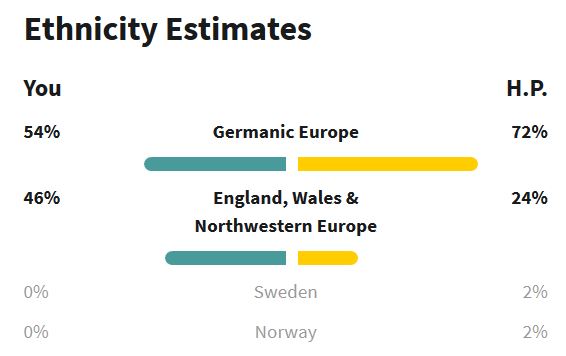
My ethnicity story according to Ancestry is 54% Germanic Europe. 46% England, Wales and Northwestern Europe. That is no surprise to me. Well maybe I expected some Irish from my paternal grandfather, Robert W. Sullivan. On the other hand so much of what I know of him has been less than forthcoming. Does DNA lie?
My DNA and Ancestry Family Tree have found 1000 + 4th Cousins or closer. Also I have 114 shared ancestors hints. I believe that means I have 114 individuals in ancestry who share my DNA or vice versa.
My closest matches are 1st and 2nd cousins that I know about.
The following example is a match that I am presently trying to sort out. 


H.P. Is the name of the tree which is run by James Peters. He has 1334 people in his tree. Our match is estimated to be 3rd to 4th cousins based on our shared DNA. It is 127 cM across 7 segments. A centimorgan (cM) is a unit used to determine the length of the DNA. The higher the number the higher the confidence and in general the closer the relationship. In this case their confidence is extremely high that this is a 3rd or 4th cousin.
Ancestry then shows the comparison of our ethnicity as follows. 


H.P. Has a higher Germanic European ethnicity than me. I have almost twice as much England, Wales I& NW European than H.P. Also H.P. has Swedish and Norwegian ethnicity. 


Ancestry then shows me the common ancestor and how H.P. Is related to me. It is our 2 times great grandfather, Jacob Peters born in 1810 at Kronsweide, Chortitza Colony, South Russia. I can now look at his tree and look at his sources as a guide to further study of our 2nd great-grandfather.
It seems like a very helpful tool. Considering I have a 1000 plus matches in DNA alone, I could be very busy trying to follow up on them. I plan to learn more about DNA genealogy and how it will help me in future.

Wendy

Sunday, April 7, 2019

52 Ancestors in 52 Weeks 2019 Week 14 Prompt - Brick Wall

52 Ancestors in 52 Weeks
2019
Week 14
Prompt – Brick Wall


Robert and Mary Sullivan on Wedding Day

A brick wall is just like it sounds. It is that point in your genealogy tree where it is seemingly impossible to go any further back on that branch. It is that point where a person seems to have been transplanted into your tree without any ancestors. How can that be?  Everyone comes from someone!
My brick wall appears in my blogs frequently. It is my mother's father – Robert Windsworth Sullivan. Grandfather Sullivan married my grandmother – Mary Krikau. They married April 11, 1921 in Winnipeg, Manitoba. Their wedding certificate is one of the few official documents that I have for Mr. Sullivan.
Grandfather Sullivan was rarely spoke of and if he was it was certainly in hushed and secretive voices. My grandmother made a good go of trying to erase him from the family. Mr. Sullivan comes with much family lore. Mary's parents despised him for her and according to my Aunt Phyllis they “disowned” her because she married him.
According to my sister who had a conversation with Grandma - this marriage was rocky from the start. The story is that Mr. Sullivan married a second women while married to grandma and was found out and was sent to jail for bigamy. I can not prove that story. However I do know that he did spend time in jail when mom, Vivian, was born. On Vivian's birth registration her father is listed as Patrick Sullivan and his address at the time of her birth is listed as Stony Penitentiary – Winnipeg.
Mary did forgive and they got back together. They had another child – George Windsworth Sullivan who died at a few months of age. On George's Burial Report Mr. Sullivan's name is Patrick W Sullivan and on George's Interment Order he is listed as P. Sullivan.
His name is not the same on any document I have. In their marriage document his name is listed as; Bob Windsworth Sullivan. In the 1921 Canada Census taken shortly after they were married he is listed as; Robt Wentworth Sullivan. Searching through Saskatoon Henderson's Books I find him as follows;

1924 – Patrick Sullivan, Chef at Barry Hotel, r (renting) 525 20th Str. W ( Colonial Apartments)
1925 – Patrick Sullivan, Chef at YMCA, r 309 Ave B North
1931 – Patrick Sullivan, emp. Commodore Cafe
1933 – Robert W Sullivan, chef, HBCO, 1435 Ave B North
1934 – Same as above
1935 – Robert W Sullivan, chef, 220 31st Street W
1936 – Same as above
1938 – Robert Sullivan, emp, Elmer Ball, r 1218 Temperance

There is other conflicting information besides his name. On the marriage certificate he lists his age as 29 and birth in Philadelphia, USA. One year later, on Vivian's birth certificate his birth place is listed as Los Angeles, Cal. and he is 32 years old.
The family lore has him moving to British Columbia and remarrying. I decided to look for a death certificate from the province of British Columbia. I found the following; I am sorry that it is so blurry. The original is packed away for now.

This Robert Wentworth Sullivan died November 25, 1952 in Chilliwack, BC. The first thing that struck me is the middle name which is close to Windsworth. I have not seen that name in my tree or any other tree. It is such an unusual name. This death certificate states he died in an "unemployment line" He is listed as Canadian Citizen of Irish Origin.  He has lived in Chilliwack, British Columbia for 10 years. That makes him as arriving in 1942 which is only 4 years after the last Henderson directory entry. The death certificate states his birth date as May 29, 1887 and his birth place as Truro, Nova Scotia. It is a little off of the date I figured out and is yet another place of birth. He is married to Jean Alice Walker and at the time of his death he lived at 519 Nowell Street Chilliwack, BC. He is listed as a cook working at a cafe and has been at this job as noted on the certificate for “life”. He last worked in July 1952, just months before his death which may be why he was in the unemployment line when he died. He died of Atherosclerotic Heart Disease which he had for at least 10 years. Well that is in line with the heart history of mom and my siblings. It runs in the family. He was buried November 27, 1952 at the Canadian Legion Cemetery in Chilliwack. The funny thing is that I can't find this gentleman on any British Columbia cemetery index for this cemetery or in Find a Grave index. How do we keep losing our dead people?
I want to believe this is my maternal grandfather but I have nothing connecting him from Saskatoon to BC other than a family story. The unusual middle name seems too much of a coincidence. His employment as a cook is consistent with what we know of him while with Mary. He is of Irish origin which we have been told he was. Keep in mind that the person giving this information for his death certificate is his brother – in – law who may not of known many details of Robert W. Sullivan. This could account for the differences in date of birth and place of birth. His cause of death is in keeping with family medical history being bad heart health. Dying in an unemployment line is a bit dramatic but it seems to fit with the way Mary's family thought of him as a “unemployed low life”!
Robert Sullivan, my maternal grandfather is my brick wall. It was a frustrating obsession when I first started genealogy and I have been tempted many times to hire a researcher.  However as I keep working on the family branches that seem to have lots of information I continue to gather experience in how to look for family records and go back to Robert Sullivan from time to time looking at what might be new from Ancestry or other on line sites.

Wendy 

Sunday, March 31, 2019

52 Ancestors in 52 Weeks 2019 Week 13 Prompt - In The Paper

52 Ancestors in 52 Weeks
2019
Week 13 
Prompt - In The Paper

I haven't received a daily newspaper since we moved from a house to a downtown condo in Calgary. It was my choice to stop getting them because so many left the house the same way they came in. That is not read. Computers and TV newscasts seem to cover the highlights in the news world. I do not miss getting the paper.
However newspapers are a gold mine to genealogists. At one time you could find birth announcements, wedding announcements, local items of interest, and of course the obituaries. Today obituaries are predominantly the only announcements that one can find in a newspaper.  I find that obituaries provide a wide range of family information or even misinformation
Franz Peters Newspaper Obituary
 In my mother's scrapbook of mementos was the above obituary for my grandfather, Frank (Franz) Peters. He died April 16, 1952 in Saskatoon. I believe it was put in the Saskatoon newspaper but like so many saved paper obits, there is rarely the name of the paper or the date it was published.  I have a problem with the heading “Here since 1907...”  because in an 1901 Canada census Frank was 24 and living with his parents in Hague, NWT Aka; Saskatchewan. Despite the discrepancy the obituary helped me figure out when Frank and his family moved into Saskatoon. 1952 – 23 years in the city means he moved into Saskatoon in 1929 or so. However I have two Voters' Lists from 1935 and 1940 which list Frank as a Farmer in Hague. Again more questions than answers. Frank's obituary also list his last known address in Saskatoon which is more of an item of interest for me. Interestingly it tells me where my aunts and uncles (Frank's siblings) lived in 1952. From that I get an answer to a question from my Bachelor Blog. That was why I had Abe living in Clark's Crossing in 1952. It came from his father's obituary. The obituary also tells me where Frank Peters was buried - had I not known.
The Mennonite Rundschau Newspaper Obituary
Staying with my grandfather, Frank Peters their is another source for his baptism, marriage, death and burial. I found this source listed in GRANDMA ( Genealogical Registry and Database for Mennonite Ancestry) and that is The Mennonite Rundschau (MR) which was the longest running Mennonite German language paper in North America. From June 1880 to January 2007. It was made as a forum for Mennonites to share their life's events with other Mennonites across the provinces, States and indeed Russia and Germany. In GRANDMA it sources his death and burial in the following index stating that Franz Peters - 1876 - 1952 can be found in MR 1952 May 7 - page 11. On a trip to Saskatoon Mennonite Historical Society, I searched for it and found it quite easily and was able to photocopy it. Again it is too bad that I do not know German. One day I will have patience and google help me translate this page.
Newspaper Obituary for Jake Peters
My father, Jake Peters, died September 22, 1983. His obituary is full of information important to me as a genealogist. Firstly I now see where the idea of my bachelor Uncle Abe being listed as dying after 1983. He is listed in dad's obituary as surviving Jake's death. In Jake's obituary we find out where he died and when. The funeral date and place is listed giving the specific address of the church. A complete list of surviving children, spouses, and his siblings and their cities. The obituary lists his 4 1/2 years in service in WWII and his lifelong employment with Intercontinental Packing Ltd. It tells me a story of Jake Peters.
Newspaper Item for Tragic Death of Dennis Jahnke
Bill's little cousin, Dennis Arthur Jahnke died tragically July 7, 1952 at two years of age. Surprisingly in the Killaly newspaper, the above article lists the specific details of his death. I am not sure that this is an obituary as much as it is a news article.
Full Newspaper Page Where W.R.A. Jahnke Was Listed As a Casualty of War

The Enlarged Section of Newspaper Where Casualties Are Listed
Bill's first cousin once removed died in WWII. Walter Robert Albert Jahnke died in a plane accident. In the Lethbridge Herald on September 23, 1942 among many articles of the war, he is listed as dying while on active duty. The information listed is no more than his name, rank, his father and address of father. There is no more information. I can only guess that there is so many casualties daily in WWII that lists is the only way to put them out there. 
While digging a little deeper and just as a matter of closure,  I found the story of Mr. Jahnke's tragic death and the place he was buried in England from the website "Find a Grave".  I had always imagined that his plane was shot down by enemy fire.  But alas he and his crew were on a two hour oil consumption test when the plane went into a 45 degree dive and it crashed. All were killed. 


W.R.A. Jahnke Gravestone in St. Nikolas Churchyard in Rutland, England.

Obituaries are a good source of family information. However remember it is usually distressed family members who author the obituaries and some times it may be just a best guess.  Newspapers are slowly coming on line and for a cost you can access them.  While looking up obituaries in newspaper of years gone by, make sure to read the entire paper as a good fun read.

Wendy

52 Ancestors in 52 Weeks Week 18 Prompt - Institution

2025  52 Ancestors in 52 Weeks Week 18 Prompt – Institution Daniel Fesser (1844 – 1933). He is Bill's maternal 2 nd great-grandfathe...