Monday, February 10, 2020

52 Ancestors in 52 Weeks Week 6 Prompt - Same Name

52 Ancestors in 52 Weeks
Week 6
Prompt – Same Name

Same names can be the nemesis of a genealogist. In a previous blog I discussed the use and re use of given names particularly in Mennonite families of old. It is also noted that children's names are often named after one of their elders.  I suppose out of respect.
My paternal 2nd great grandparents are Klaas and Susanna Peters (nee Klassen) and were married December 25, 1826. They had 16 children. 
Their first child was Judith Peters and she lived less than 1 year.  Judith was named after Susanna's mother. The Judith name was recycled to their 11th child however the second Judith only survived weeks.
Their second child was Franz Peters and he was named after Susanna's father. Franz was born 1828 and lived until his death in 1893.
Their third child was born Susanna and lived a year (1829 – 1830).
Their fourth child was a daughter named Susanna and was born in 1831. She died 11 months later in 1832.
Their fifth child was Aaron Peters. He was born in 1832 but died 8 months later in 1833.
Their sixth child was a son born in 1833 and named Aaron. Aaron lived until 1895 and died in Manitoba, Canada.
Their seventh child was a son whom they named David Peters. He was born April 18, 1835 in South Russia Mennonite Colony. David Peters is my direct line paternal great grandfather. He married Katherina Mueller on June 5, 1859 in South Russia. Together with 7 children they immigrated to Manitoba in 1875. David Peters died April 14, 1919 in Saskatchewan. My first cousin once removed has David Peters' Saskatchewan death certificate and it states he died of atherosclerosis and myocarditis and was likely buried on his home quarter section of land in Saskatchewan. I believe it is north of Saskatoon.
Returning to Klaas and Susanna's children.
Their eighth child was a daughter born in 1836 and they named her Susanna. Susanna lived until 1900.
Their ninth child was a son whom they named Jacob. He was born May 1, 1838 and died July 19, 1838.
Their tenth child being another son was also named Jacob. He was born June 19, 1839 and died the same day. 
As I mentioned above, their eleventh child was a daughter and named Judith. She was born June 19, 1835 and died on June 25, 1839.
Their twelfth child was born a son on June 20, 1840. Once again tragedy struck and Jacob died August 16, 1840.
Their thirteenth child was another son born June 30, 1840 and named him Kornelius Peters. I originally thought that this child should have been re named Jacob however I noticed that when this child was born Jacob was still living. Kornelius died August 19, 1840 – just 3 days after Jacob died.
Their fourteenth child was a son born Dec 12, 1841. They named him Abram Peters. If the pattern of recycling the names continued, one would have thought that this boy would have been name Jacob or Kornelius. Abram died 16 days later on December 28, 1841.
Their fifteenth child was a son born January 9, 1843 and was named Isaak. He lived until December18, 1904. 

Klaas and Susanna sixteenth and last child was born a son. He was named Peter Peters. He was born and died on July 1, 1844 
The last 3 children as listed above are from Klaas and his first wife. 
My paternal great grandfather, David Peters married Katharina Mueller on January 5, 1859. They were married in South Russia. They had 15 children. 
Their first child was a daughter named Katharina M. Peters. She was born in South Russia on November 22, 1859 and lived until June 29, 1943. She died in Mexico. She was part of the Hague colony that broke away and immigrated to Mexico.
Their second child was a son and they named him David M. Peters. He was born December 20, 1860. He lived until September 22, 1861.
Their third child was a daughter born on March 8, 1862. She was named Susanna M. Peters and lived only a few short weeks dying on March 22, 1862.
Their fourth child, a son, was born the following year on August 15, 1863. He was named Klaas M. Peters. Ten days later he died on August 25, 1863. The name Klaas was not used again in their family.
Their fifth child was a son named David M. Peters. He was born in South Russia on July 27, 1864. He died in Saskatchewan on May 22, 1925. 
Their sixth child was a girl named Maria M. Peters. Born February 12, 1866. She died a few short months later on July 5, 1866.
Their seventh child was a daughter born July 22, 1867. They re used the name of their third child and was called Susanna M. Peters. She lived to be 50 years old and died on January 21, 1921 in Manitoba.
David and Katharina's eighth child was a girl named Helena M. Peters. Born January 8, 1869 and died 58 years later on April 10, 1927.
Their ninth child was a son and they named him Johann M. Peters. He was born April 26, 1870. He lived two weeks and died on May 10, 1870. 
They had twins as their tenth and eleventh children. A boy named Isaak Peters born and died the same day of March 28, 1871. The girl was named Maria M. Peters. Obviously also born on March 28, 1871. She died less than two years after her marriage to Herman Peters (maybe a relative) on February 24, 1892. Maria died less than two weeks after her first and only child was born. This leads one to believe that it may have been due to complications of childbirth. And her baby's name was Maria Peters born and died on February 5, 1892. Maria seems to be somewhat of an unlucky name.
David and Katharina's twelfth child was a daughter they named Eva M. Peters. She was born in South Russia on March 4th 1873. Eva lived to 29 years of age. Eva was married to Abram Bergen. She died the same day as the birth of her 7th child, Franz Bergen. Unfortunately Franz died a few short weeks later on January 1, 1903.
David and Katharina's thirteenth child was a daughter named Judith Peters. She was born November 7, 1874 in South Russia. Judith married Jacob Ginter in 1894. Judith like her sister Eva lived to be 30 years old, dying April 24th, 1905 just weeks after giving birth to her seventh child named Jacob. I do not know if Jacob Jr. Lived or died at the same time. I do not have his date of death.
The fourteenth child of David and Katharina was Franz Peters. Franz is my grandfather. He was born July 29, 1876 in Plum Coulee, Manitoba. He was the first child of David and Katharina to be born in Canada. Franz died April 16, 1952 in Saskatoon, Saskatchewan.
The fifteenth and last child born to David and Katharina was a girl named Gertruda M. Peters. She was born on June 7, 1879 in Manitoba. She lived to the ripe old age of 90 dying March 11, 1970.
 
My grandfather, Franz Peters married Elisabeth Dueck on February2, 1902 in Blumenthal Colony, Saskatchewan. They had 11 children together. 
First child is Franz Peters born 1903 dying in 1977. Their first born son was named after his father. 
Circa Early 1970s - Frank Peters
Second child is Helena Peters born in 1904 dying in 1994. Elisabeth's mother was named Helena and maybe she was named after her. 
Circa 1950's George & Helena Heide Nee Peters

Third child was David D. Peters born 1906. I do not have a date of death other than he died “young”. David perhaps was named after Franz's father's name – David Peters.
Fourth child was Johann Peters born 1908 dying in 1976. Was he named after Elisabeth's father named Johann Leonard Dueck (Dyck)? 
Circa 1970's John and Anna Peters Nee Penner
Fifth child was David D Peters born in 1909 and died in 1986. This is the re used name of their third child.
Circa 1970 - David Peters
 Sixth child was Jacob D Peters born in 1911 and once again I only have the notation that he died “young'.  Elisabeth's oldest brother is named Jacob Dueck (1869 to 1926).
Seventh child was William D. Peters born in 1913 and died in Ladner, British Columbia in 1986. We knew him as Uncle Bill.  Elisabeth's second oldest brother was named Wilhelm Dueck (Dyck). Elisabeth's brother, Wilhelm only lived for one month. 
Eighth child of Franz and Elisabeth was Katariena “Shirley” Peters born 1914 and died in Vancouver in 2003. We knew her as Katie or Shirley. Franz's oldest sister was a Katharina. 
Katie "Shirley" Noxel Nee Peters
Ninth child is my father Jacob Peters. He was born in Hague, Saskatchewan on March 28, 1917 and died in Saskatoon, Saskatchewan on September 22, 1983. We have to assume that the first Jacob died before 1917. Was my father named after his mother's oldest brother? 
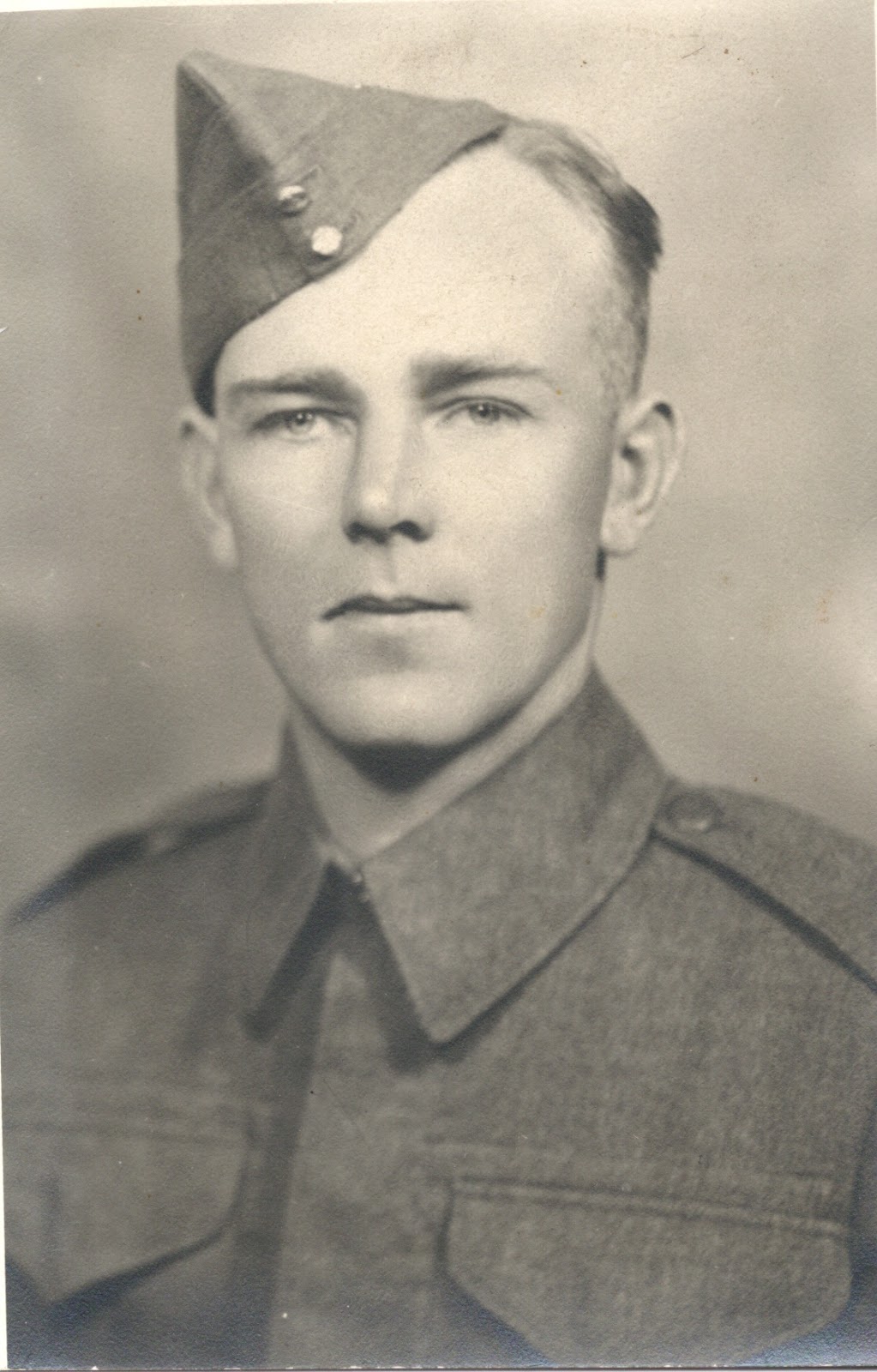
Jacob Peters 1941
Tenth child was Mary Peters. She was born in 1919 and died in 1980. Both Elisabeth and Franz had siblings named Maria. 
Mary Peters

The eleventh child was Abraham (Abe) Peters born in 1926. I do not know his exact date of death. Also I do not have a sibling of Franz or Elisabeth with the name of Abraham.
Circa 1980's - Shirley Noxel, Helen Heide & Abe Peters
I hope I have shown in these 3 generations how the same name is recycled among the children. There seems to be a general rule to their naming convention.  Note also the middle initial of some of the names above.  It is the same for every child.  It stands for the first initial of their mother's maiden name. That can make it somewhat easier to put together the right person when there are so many with the same name.  

Wendy

Monday, February 3, 2020

52 Ancestors in 52 Weeks Week 5 Prompt - So Far Away

52 Ancestors in 52 Weeks
Week 5
Prompt – So Far Away

In the early spring of 2007 I had the opportunity of a lifetime to go to Japan where my daughter was teaching English to school children. It was called The Jet Program which stood for Japan Exchange and Teaching Program where university graduates can apply for a 3 year contract to teach school age children. She applied and was accepted to teach in Onomichi.
Jackie Teaching in Classroom

.
If there was a bucket type list of places I would like to travel to, Asia was second last. Africa is last.
The travel gods aligned and after much trepidation I booked a 30 day trip to Japan. It was my thought that if I was going so far away, I was going to make it worth my time. Unfortunately, Bill did not have 30 days of holidays to take.
One of those things I dreaded most was the long long flight. I left from Calgary and flew to San Francisco and then had a 5 1/2 hour wait at the airport to catch a 11 1/2 hour flight to Osaka. Then once I landed Jackie and I took an hour long bus trip to get to Kobe where Jackie got a hotel room so I might finally get some rest. Further there was a 16 hour time difference. It was all very disorienting.
My first full day in Japan was spent wondering around the city of Kobe with Jackie close to my side. I definitely had the feeling that I wasn't in Kansas anymore! I found that not being able to read street, store or other signs very disconcerting. In Germany, France and Holland I could at least read the letters and make a guess at what the word could be. But Hiragana might as well been hieroglyphics. I did not realize how much I read without thinking about it. I prepared myself for not understanding the spoken words but not for the written word. Since I could not make sense of the spoken or written word, I feel that my visual acuity took over. I liked what I saw. And then I blogged about it so I would not forget about it. Recently I have re read my blogs and it brings so many happy wonderful moments of a time long long ago in a far away place.
At the end of my first week in Japan I wrote the following in a blog I called
Another Day and Another City 
“Jackie tells me it is Monday. Tomorrow we leave on the Shinkansen for Kyoto. Yea us.
I would love to update you however it has been very active and busy at this end. Not that there is anything wrong with that.
Let's see, we have been to Kobe, Onomichi, Hiroshima, Myojima, and back to Onomichi to do the laundry but first we went to Fukuyama this morning. It is approximately 18 minutes by train from Onomichi. Right outside of the train station they have a huge Starbucks. Ah it was so sweet to have my favorite misto. I will be going often to Fukuyama to get my Starbucks's fix. I even sat an hour and a half catching up on my journal and people watching. It was a piece of heaven to know some things are the same the world over.”
Overlooking Kobe


Kyoto - Kinkako- Ji (Golden Shrine)


Kyoto - Ryōan-ji


Todaiji Ju Temple in Nara


Fushimi Inari


Hiroshima Peace Memorial

Hiroshima Atomic Dome

Iconic Orange Torii Gate Miyagima
In Kyoto I learned about Ryokans and Onsens. We stayed in a Ryokan which is a Japanese style inn. I blogged this. “Our room was covered wall to wall with tatami mats. Tatami mats are straw covered mats that traditionally cover Japanese floors. To me it smelled of hay fields, but Jackie really liked the smell. Jackie immediately rearranged the table and we set up our futon beds. In an upper end ryokan, this would be set up for you. We had to figure it out for ourselves. We each had two futons to lie on. The second futon is covered in a fitted sheet. This is to lie on top of. You are provided with the whitest flat sheet which we figured out must go next and then the last futon is for covering up with. I provided no end of amusement the second night trying to figure out how to get it set up exactly. In the end I was lying on three futons and had one sheet over me and that was on the second or third try. “
Our Ryokan with Tatami Mats and Futons
“The key to a ryokan is the onsen or the communal bath. Our onsen was on the fifth floor. There is a very strict protocol in using the onsen. You enter the changing room and grab a basket to put your belongings into. You undress right there and with any other women who are there. You leave your basket of clothes and walk naked into the hot tub room. Along the wall is a row of shower heads at thigh height. You grab a bucket to sit on and a wash basin. You walk over to a shower head. You sit on a bucket and proceed to wash yourself thoroughly. I mean thoroughly. You start with your scalp and hair. Rinse. You then lather every inch of your body with soap and be sure to get between your toes and both cheeks if you know what I mean. Rinse and for good luck do it once more. Once you are squeaky clean and rinsed you can proceed to the bath which is very warm. You sit naked in there with others careful to avert your eyes. That means you are staring at your own body. In my case that was frightening of and in itself. After you can't stand it anymore you walk out, dry and put on your yukata and walk back to your room. Remember to wear your slippers. Jackie had to tell me that your shoes and slippers are always placed facing towards the door. Who knew?!!
I have slept in my first ryokan and used the communal bath. These two experiences were great. Japan has some real treasures and some of them are not on the UNESCO World Heritage sight.”
In my next blog I chose to write about those everyday things such as toilets. Japanese traditional toilets are of the squat type.
And You Thought I Would Talk Of Golden Shrines!
"I must admit that among other things, using a squat toilet was definitely on my list of living outside "the box" or my comfort zone. I thought about it often and talked to Jackie about it. She said not to worry about it as western toilets have become more popular.
A squat toilet looks like a urinal laying on the floor. I was told that you walk in and pull down your clothes and squat. Remember I was telling you about the agility of the Japanese women and men, well now I know why.
I saw my first squat toilet at a tour site in Kobe. Jackie was good enough to tell me that the wheelchair stalls always have Western toilets. Well suddenly I was happy and started to use them exclusively. For the next few days, Jackie would go into the restroom first and then come back to report to me about it's status. It's a western one, mom or it is a great bathroom if you need to use it. The funny thing is that I would only need to use it if it was western. Jackie caught on and then decide that I would have to find out for myself. Great trepidation followed me the first time and to my great relief it was a beautiful bathroom with many many stalls and most were squat, but the rest stop had labelled maybe a half dozen as Western. Yea for me again.
I would like to add at this time that toilets are either squat or the Mercedes type. I sat on the toilet seat and just about shot off because it was heated. Who knew that heated seats really existed? Not a bad touch. But God forbid they put more than one button beside the toilet. Then you were taking your chances as to whether it might shoot water or blow dry you. I speak the truth.
After a week of avoiding squat toilets and feeling kind of good about it, I met my match in an out of the way temple in Kyoto. It was squat or nothing. I could not ignore mother nature this time and had to use it. I managed but was mortified that I would come out with a wet spot on my pants somewhere.”
If one is to visit Japan there could be no better time than the spring during cherry blossom time. It is called Sakura.
Hanami Party Under Sakura


The Sakura Have Bloomed
Onomichi is a beautiful city. I can see why Jackie loves it. Yesterday we met up with Jackie's friend and language teacher, Yoko. Yoko has live in Onomichi for most of her life. She is a wonderfully warm women who has gone to great lengths to help Jackie with plans and sights for us to visit while I am in Japan.
After lunch we took the rope-way (cable car) to the top of the mountain in Onomichi. We had picked a beautiful day. The Sakura were out in full bloom. The sight was breathtaking and I must admit that no picture will ever do it justice. The views from the observation deck allowed me to see all of Onomichi and some of the many islands in the Inland Sea. The atmosphere is almost festival like. Some families were picnicking under the cherry blossom trees. This is called Hanami and is often declared a national holiday when the blossoms are in full bloom.
Yoko was wonderful to have along. Her English is quite good. She was able to point out several things that we would not have known. The mountains of Onomichi have many temples and shrines. She took us to one of the older ones and shared information about it. We had a very interesting discussion on graves and how all are cremated in Japan. She found it interesting that we did not always cremate. She found it hard to believe that one grave could be for one person. The graves we saw were for families.”
These little gems about Japan from a local person were awesome and not something I would have gotten from a regular tour. 
Japan And My Coffee
...However all kidding aside, the walk back to Jackie's home is wonderful. We pass by one of many temples and shrines in Onomichi. I also step lively past the graveyard.(It creeps me out), but they are everywhere. The walk ways are sidewalk narrow and meander between houses at times just arm lengths apart. It is history that I walk by every day while getting my coffee from the vending machines. It is beautiful trimmed trees and gardens. It is Cherry blossom trees. It is flowers. It is homes that are so paper thin that you can hear what is happening on the other side of the wall just a few inches away. It is hundred of years of eeking out every square inch of land for the people who live on it. It is nothing I have ever seen or experienced on my walks at home in Calgary. And I love it.”
Jackie's Onomichi Home


 A Japanese Afternoon.

I think I left off talking about going to Jackie's teacher, Yoko San, for the afternoon. Yoko has been just wonderful to me. She picked me up that afternoon. I forgot how nice it is to have a car to come and go as you please. Yoko is easy to talk to and at times not so easy to understand. She actually has remarkable English skills. This is really quite uncommon for Onomichi. I also believe that she is very curious about "foreigners". As she said to me that in as little as ten years ago, seeing white people in Onomichi was very rare. Now that teaching English has been mandated in all the grades, the English speaking students are coming to all the cities, towns and villages and teaching their children. Slowly the Japanese are becoming accustomed to seeing the foreigners in their towns.
It is these king of talks that Yoko and I have had. She was more than happy to entertain me for the afternoon while Jackie was at work.
Earlier in the week, she asked me what my favorite food was so far. I told her that Jackie and I had been to a restaurant where we had okonomiyaki. I thoroughly enjoyed it. She then said that Jackie and I should come over and she would show us how it is made. Wow that is quite the invitation and I was quite excited to participate. The plans evolved into a whole afternoon event.
She picked me up and we immediately went to her favorite grocery store. She had to buy all the ingredients. More over she wanted to show me all the foods that make up a Japanese grocery store. We spent over an hour in two grocery stores. She showed me all kinds of wild and wonderful vegetables, fruits, fish, rice, seaweed. powders and teas that I have never seen or at least never looked for in Calgary. Once we had all the ingredients we went back to her house and waited for her teacher.
I think in the previous blog, I said Yoko San was a teacher. She isn't. She is a student and it takes a lot of practice to learn how to dress someone in a kimono. The teacher came and the fun started. This women of whom I can't remember her name, has apparently held the country honor of being able to put on her own Kimono the fastest. After I was in one, I can't believe she is actually able to put it on herself.
There was much fussing about the colors of the kimonos and sashes and ties. There was several kimonos there which surprised me. I am told that the kimono usually costs approximately $1000.00 Canadian, and that is at its cheapest. Yoko San had several handed down to her from her mom and several she has acquired over the years.
Finally everything was decided while I stood wondering what to do. Off with the clothes. The Japanese have no body issues. The teacher helped me on with a top half slip which was tied in the back and a half slip. Then because I had bigger feet than them they found me a pair of stretchy split toe socks to put on. Okay, its starting to come together, I thought. Then the second layer of a lighter but fancy shorter Kimono. This is the first layer around the neck. There was much tying and cinching and knotting. However because it is behind you, I had no idea what was going on. Next the most beautiful silk Kimono was put on me. More belts and wrap around ties with plastic, cardboard inserted in the front to keep it flat I guess. The silk and brocade wrap around the waist was put on and cinched and more ties and rope belts. In the end I was in a kimono and felt quite elegant. Uncomfortable, but elegant. Then Jackie arrived and I got to watch how they dressed her. It is unbelievably complicated. We both looked so elegant. Yes there was lots of pictures taken.
The teacher left and then Yoko San had us to her tea ceremony. That is another thing all steeped in tradition.
We then undressed,although we didn't want to and went to the kitchen to make Okonomiyaki. A pancake type batter is used to bind together the cabbage, noodles, meat vegetables, fish layers. It is usually cooked at the table and in a restaurant you get to use the wooden spatula to eat it with.
I was also served Sake and another sake like drink. Jackie and Yoko couldn't join me as there is zero tolerance for drinking and driving.
It was the most wonderful afternoon. And something that I will remember for a very long time about my trip to Japan.”


The following blog was what I felt about Japan at the end of my trip.
Thoughts On Japan.
“I have been asked many times what I think of Japan. My first answer is that it is more beautiful than I thought. For what ever reason, I thought of Japan as an endless flat land with wall to wall people. I cannot get over how wonderfully lush and green and mountainous Japan is. If I would have thought about it, of course it is mountainous, because it is volcanic land.
The fauna and flora is so variant. I did not expect to see Palm trees, large fern like plants and trees. There are pine trees along side of maple trees. Of course I have talked to death the beauty of the Cherry Blossom trees. Jackie has a blooming Magnolia tree in her front yard. It is all so wonderful.
Japan is clean. I mean squeaky clean. When I got off the plane and entered the airport, I couldn't believe how shiny the floors were. Yesterday, Jackie and I were on a train to Fukuyama. You could have seen your face in the polished shine of the train floor. I am not kidding.
As I mentioned before, they are into dividing their garbage into combustibles, etc. Leaving trash behind is never heard of. It is just not done.
Jackie was telling me about the school children. They have lunch. The pre arranged list of children have to go down to get the soup pots and dishes and etc. They are also the ones that have to serve each child. Each child has the same thing and no one is allowed to not to finish their meal. Allergies are unheard of. After lunch, they then clean the school. There are no janitors. Each child has their turn at cleaning the desks, toilets etc. I understand how it would be in their best interest to keep things clean.
The Japanese toilets,as a matter of rule, do not have hot running water. Most sinks run cold water. They usually don't have soap or paper towels. Everyone has a small cloth, usually terry, in their purse or pocket and they dry their hands on them. These cloths seem to be another place of fashion expression. When you eat or have a coffee in a restaurant, you are given either hot wet towels, or more likely individually wrapped disposable hand cleaners to use prior to eating.
Most of the drivers of bus or taxi wear white gloves. They also wear suits. It is very formal looking.
The Japanese people are always dressed very smartly. Usually business suits, both men and women. Women who are not in business wear, dress in very fashionable clothes with the best high heel shoes and matching purses. Even the children wear good clothes and if they wear jeans they are the designer jeans and lovely jackets and intricate blouses. The more mature women seem to wear dresses and skirts more often.
The school children wear uniforms. They girls wear black skirts, and white knee socks. The boys wear black suits. They are the same. Even their backpacks are the same. Their shoes are black. I wonder if dressing in a uniform all their formative life follows to their adult life as stylish dress wear.
Practically everyone has a cell phone. They are constantly in their hand. No one is speaking. They text message each other constantly. They rarely need to call someone and talk. I think that is an interesting concept that I can't wait to take hold in Canada. The cell phones here are technologically so far ahead. I had a hey day looking at all the cell phones that I will not be able to use back home. By the way the cell phones are always decked out in bling. Jackie says it is one way to express themselves.
The Japanese people are endlessly polite. It took me a long time to get use to everyone bowing. The cart lady on the train who brings refreshments will bow upon entering and leaving each car. It is a slight bow at the waist with the hands together in front of your body.
I have seen business men really bow and bow many times to each other. I wondered where the cut off is to bowing. Quite often as I walked the paths of Jackie's home, I will run across some women and they always seem to bow which reflexively makes me bow back. I don't know why it just happens.
The newscasters always bow at the beginning of each segment and as it goes to commercial. Respect is a huge here. Having said that I found it funny that entering a busy train, it is every person for themselves. No one gives up their seat. However they do cue up for the entrance to the train.
I like their language. It is almost musical in tone. It is most often soft, unless you are in a market where they are yelling for you to enter their store. The yelling is more musical and has pitches to it. When you enter a shop their is always, and I mean always someone their to greet you. I believe it is something equivalent to welcome to our store, or thank you for coming and sometimes a little bow. It makes you feel important.
When you pay for your goods, there seems to be this procedure that I think I have figured out. They ring it up and then tell you the amount. You get your money and then put it in the tray. I think never directly into their hands. The change you get back is given to you in the paper money first. It is handed over to you with both of their hands like an presentation. I believe you are to receive it with both hands. Then they hand you the change with both hands and again you accept it with both hands. They say arigota something something and give a head bow.
There are so many little details and traditions that I have enjoyed. I can only imagine the years of history behind them. It is a mystery to me, but it is not to the Japanese people.”


Wendy


Monday, January 27, 2020

52 Ancestors in 52 Weeks Week 4 Prompt - Close To Home

52 Ancestors in 52 Weeks
Week 4
Prompt – Close to Home


My oh my; I misspoke myself!
Last week's blog had some errors and I will try to correct them in this week's blog. My sister, Betty helped me figure out those things that weren't quite correct. Sometimes when I try to piece together the scant information I have; I don't get it right. Along with the corrections, Betty was able to go on and tell more stories which brought many more memories. 

In last week's blog I said;
“Initially Vivian and her daughters lived in a room at the back of a coal shed across from her mother's home in the 500 block of Avenue K in Saskatoon.”
It was not an actual coal shed. It was however in the coal yard's office which had two rooms at the back of this office. This was the place they lived. 
This is a google map reconstruction of the area in Saskatoon. Placements are approximate and those businesses did not exist in the 1940's, but you get the gist. Betty remembers running across the field of community planted gardens to get to Grandma's house. Vivian did work odd jobs at this time. However, Betty feels that they would have been financially stable because part of dad's war pay would be sent directly home to mom.

The next statement I made that was incorrect was the following:
“Eventually Vivian and her two daughters moved back into her mother's home until Jake came back from the War.”
Betty says they never ever lived with Grandma McLaughlin and her husband Benjamin. Grandma's home was tiny. I figure it was 600 square feet more or less. At this time there was Grandma, Grandpa McLaughlin, and her son Wallace. Grandma also had a border named Fred. He was the next door neighbor's son. That family went through some domestic problems and eventually went their separate ways leaving grandma to take on 12 year old Fred as a border. So two adolescent boys and two adults already made for tight quarters. 
Circa 1930's - Mary and Benjamin McLaughlin On The Porch of Their Home
Also Benjamin and Vivian did not get along and that might just be an understatement. Benjamin did not want “those brats” in his house. Besides this all out battle, Benjamin's health was deteriorating. Benjamin was about 32 years older than Mary. In his last few years he developed dementia and proved to be quite a handful for Mary to take care of. Benjamin died Feb 1, 1945.

The following statement that I made turned out to be not quite right.
“By late 1959, Jake and Vivian bought their first house on Witney Avenue. It was a dream come true for them and there family.”
Betty feels that Jake and Vivian's first owned home was the home they had after Jake returned from war. It was 1100 Ave K. South and was a wartime house. Betty remembers it had 2 bedrooms, a kitchen and bathroom. This house was within walking distance of Vivian's mother's home. 
Row of Wartime Houses in Saskatoon.
Wartime homes. They are quite distinctive and easily picked out of a lineup of homes. Typically they are small wooden homes that have no eaves and no basements. Between 1941 – 1947 a crown corporation was started to deal with Canada's housing crisis. It was called Wartime Housing Limited. The crisis came about because of the war. Canada was part of the war effort by manufacturing war armaments. Factories popped up to produce them. Many factory workers did not have adequate housing. The government came up with a plan to mass produce these modest prefabricated homes so that they could be quickly built usually within 3 days. There was about 5 to 6 basic house plans. They were rented out for 22 – 32 dollars a month.
It soon became obvious that the returning veterans were going to be in need of homes. Since this government corporation was already making, building and collecting the rent of the wartime houses it became an obvious choice to continue by placing them in the cities of returning veterans. They were built on properties that had water, sewage and power systems in place. Also they had to be built on land owned by the city. Thus the homes were spread throughout the city. These homes were meant to be temporary homes however they are still standing to this day.
They could also be bought out after several years at a significant price break.
Jake and Vivian had Robert while living in this first home. Soon Vivian became pregnant again and they moved to a bigger two story wartime house just a few blocks north of their first one. Betty remembers the house was 905 Avenue K South. It had 3 bedrooms. They had a coal and wood stove with a coal shed out back.
Betty has memories of this home as being only 4 or so blocks from Grandma McLaughlin home. Also Betty's school – King George – was halfway between the family home and grandma's home. 
Saskatoon King George Public School
So Jake and Vivian may have bought these wartime homes for their ever growing family. They were definitely a good deal to purchase for the war veterans.
It was interesting to me when I was placing these homes on the map to have a better visualization,  how close they were to Grandma McLaughlin's home. If I had to guess I would say that this was done on purpose.  Grandma was a big part of her daughter and grandchildren lives.
Circa 1953 - Diane, Dennis, Grandma M., Robert and Betty
I use to think that photographs were the best memory joggers for those family members that I interviewed. But I have discovered a new way to get information from family members.  That is write something that is not quite true and the corrections along with new stories and memories will flow.


Wendy

Monday, January 20, 2020

52 Ancestors in 52 Weeks Week 3 Prompt - Long Line

52 Ancestors in 52 Weeks
Week 3
Prompt – Long Line 


A little genealogy humour!
 
In this week's blog I have decided to include a 6 generation Ancestral Chart of my mother, Lydia Vivian Peters (nee; Sullivan). It is what I consider as a long line of dead people in my genealogy tree. 


Maybe 1950's - Lydia Vivian Peters
This week will be 33 years since my mother, Vivian died. She died January 24, 1987 in Saskatoon, Saskatchewan. She was 64 years old when she died – younger than me!
May 20, 1978. Vivian and Jake Peters On The Occasion Of Bonnie and Doug's Wedding
She was known by her second name – Vivian or Viv. Vivian was born in Winnipeg on April 19, 1922 to Mary and Robert Sullivan. Vivian's father is the same black sheep that I have blogged about in the past. On Vivian's birth certificate he is listed as a “prisoner” living at The Stony Mountain Penitentiary.
None the less her father and mother got back together and moved to Saskatoon, Saskatchewan. They had another child – a boy called George Windsworth Sullivan who only lived a few months. Vivian was growing up in a home where the marriage of her parents was falling apart. Vivian became a big sister to her brother, Wallace in 1927.
For the next 4 years Vivian and her brother were raised by their poor single mother. I am not sure where they lived or how Mary made money to support the family. At this point Mary's parents and most siblings lived in the United States although some remained in Winnipeg.
Vivian's mother worked as a housekeeper and fell in love with the gentlemen she cleaned for. They married on April 1, 1932. Vivian did not approve or pretend to like her mother's husband (Benjamin McLaughlin).  Later in life in discussion with her brother, Wally,  he stated that Vivian remained in the car for the entire wedding ceremony. Vivian gave her mother a very hard time over the next several years. Vivian quit school when she was in her 9th grade. Vivian loved to sing and play her guitar and in fact she sang on the local Saskatoon radio station. She ran away from home at the age of 15, but returned. Vivian married at the age of 16. She married Jacob Peters. The very next spring she lost her first baby. Her and Jake struggled to make ends meet and depended heavily on both sets of parents. Vivian's husband worked odd jobs but times were tough in the job market.
Vivian's husband was enlisted into WWII in January, 1942. At the time of his enlistment Vivian and Jake had one daughter with a second child on the way. Jake was overseas in wartime until his discharge in March of 1946. Initially Vivian and her daughters lived in a room at the back of a coal shed across from her mother's home in the 500 block of Avenue K in Saskatoon. Vivian worked at odd jobs such as chopping wood or shoveling coal. Eventually Vivian and her two daughters moved back into her mother's home until Jake came back from the War.
Vivian and Jake lived in many different rental homes over the years. Jake worked at the meat packing plant to support their growing family. Vivian also worked helping her mother who was a cook at Quaker Oats Mill.
In the mid 1950's my mother was working at Joe's Diner. Their oldest daughter, Betty looked after the children while mom worked mostly after school and on the weekend.
By late 1959, Jake and Vivian bought there first house on Witney Avenue. It was a dream come true for them and there family. They had 7 children ranging from toddlers to high school ages. Vivian's last child was tragically born stillborn.
The house was an economic strain on the family. Vivian had very little choice but to go to work. She worked as a cook in various locations including her final employer, St. Paul's Hospital. Vivian went to work long before it was a thing that women with children did. In the early 1960's no one in Saskatoon locked their doors. However in a way Vivian's children were latchkey kids long before it was coined. The older siblings and sometimes grandmother helped out with lunches. School went to 4 pm and Jake came home by 4:30. Thus there was very little time that the kids were left alone.
Vivian did what she had to do to keep the house and make it a home. It could not have been easy. However she saw her children grow and thrive and eventually marry and move out. Soon her home was filled with grandchildren.
Vivian's husband of almost 45 years died in September of 1983 of cancer. Jake died at home as was his wish. Vivian was devastated and heartbroken. She was lost.
Vivian was a smoker for most of her life. She had numerous medical problems that probably were a result of this. She had Chronic Obstructive Pulmonary Disease (COPD), angina, atherosclerotic heart disease (ASHD). She developed late onset diabetes at this time. She had blood clotting issues over the years. Medically she was complicated which got worse after her husband died.
Vivian lived a little over 3 years after her husband died. In the final month of her life, Vivian spent more days in the hospital than outside. She died on January 24 of 1987 of Myocardial Infarction (heart attack). However many of those who knew her said she really died of a broken heart. 


Wendy

52 Ancestors in 52 Weeks Week 18 Prompt - Institution

2025  52 Ancestors in 52 Weeks Week 18 Prompt – Institution Daniel Fesser (1844 – 1933). He is Bill's maternal 2 nd great-grandfathe...